

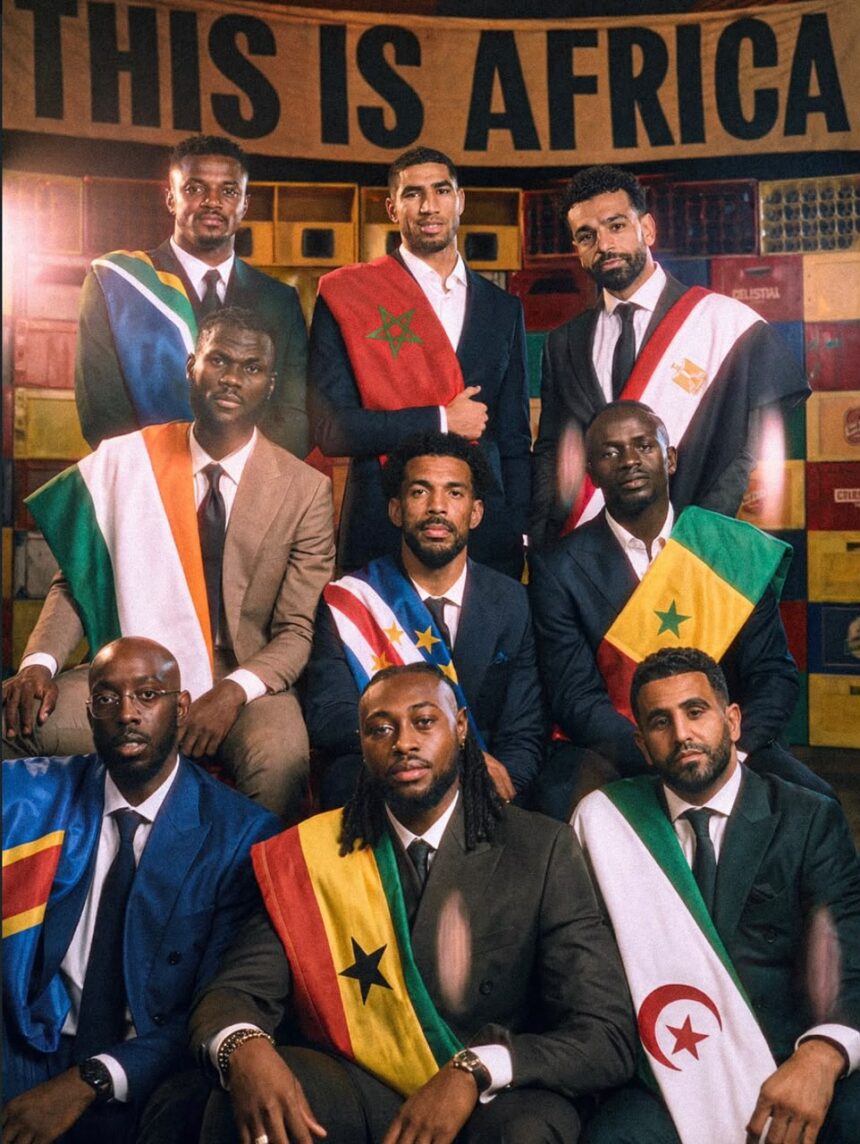
A defining shift has occurred in international football. The 2026 FIFA World Cup has rendered the old narrative about African football obsolete.
For decades, African nations arrived at World Cups burdened by expectation, not the expectation of winning, but of proving they belonged. Every victory was framed as an upset. Every deep run was treated as an anomaly. Even Morocco’s historic march to the semifinals in Qatar four years ago was viewed by many as a once-in-a-generation story rather than the beginning of something much bigger.
That conversation is over
With a record ten African nations qualifying for the expanded tournament, the continent has announced its arrival on the global stage with unprecedented force. Nine of those teams secured qualification to the Round of 32, a collective achievement that stands as a powerful declaration of African football’s rising dominance and sets a new standard for the continent. The previous benchmark of just two African teams reaching the knockout stages now feels almost insignificant by comparison.
What makes this achievement remarkable is not simply the numbers. It is the manner in which those numbers were earned.
The evidence has been impossible to ignore. Morocco once again stood toe-to-toe with world football’s elite, holding Brazil to a 1-1 draw and confirming that its success in Qatar was no accident. South Africa produced one of its finest performances on the global stage to overcome South Korea and secure a place in the knockout rounds. Ivory Coast displayed tactical maturity and composure in defeating Ecuador, while Congo authored one of the tournament’s defining stories by recovering from an early setback to beat Uzbekistan 3-1, claiming its first-ever World Cup victory and reaching the Round of 32 for the first time in 52 years. Algeria, meanwhile, embodied the resilience that has defined Africa’s campaign, battling to a dramatic 3-3 draw against Austria to seal qualification.
These were not fortunate results. They were accomplished performances against quality opposition.
Perhaps the most encouraging aspect of this tournament has been the emergence of nations that few expected to reach this stage. Cape Verde and Congo are no longer romantic stories of overachievement; they are evidence that the competitive base of African football has widened. The continent’s strength is no longer concentrated in a handful of traditional powers. It is spreading.
That evolution has not happened by chance
Across Africa, investments in youth development, better coaching, improved scouting networks and stronger pathways into elite football are beginning to bear fruit. Young African players are entering top European environments earlier, becoming tactically sophisticated without losing the flair and athleticism that have always distinguished the continent’s football.
The result is a new generation of teams that no longer arrive at World Cups hoping to surprise the world. They arrive expecting to compete with it.
This tournament should also serve as a wake-up call for football’s decision-makers. Scouts, sporting directors and clubs can no longer afford to limit their attention to a handful of familiar markets. The depth of talent across Africa has never been greater, and those who recognize that reality early will enjoy a competitive advantage.
There will undoubtedly be difficult tests ahead. Knockout football is unforgiving, and not every African nation will continue its journey. But that is no longer the point.
The real victory has already been secured
This World Cup has recalibrated the global football landscape. African teams are no longer measured by their ability to produce occasional shocks, they are measured by their ability to consistently compete with football’s elite. That, more than any statistic, is the true significance of this tournament.
The conversation has changed.
The question is no longer whether Africa belongs among football’s leading continents.
The only question that remains is how long it will be before an African nation lifts the FIFA World Cup.