

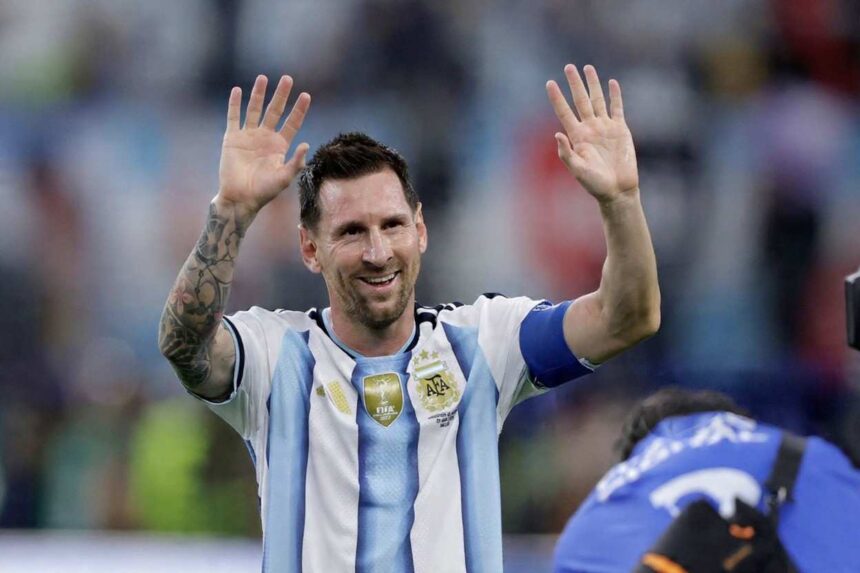
Lionel Messi has scaled yet another football mountain. The Argentina captain is now the outright leading goalscorer in FIFA World Cup history after scoring twice in his side’s victory over Austria, taking his tally to 18 goals and moving clear of Germany legend Miroslav Klose.
For years, football fans debated whether Messi could add a World Cup trophy to his glittering collection. He answered that question in Qatar in 2022. Now, at 38, he has answered another. He stands alone as the most prolific goal scorer the tournament has ever seen.
The Record Everyone Expected But Few Expected So Soon
Messi entered Argentina’s second Group Stage match of the 2026 World Cup level with Klose on 16 goals. He had matched the German’s long-standing record with a stunning hat-trick against Algeria in Argentina’s opening game.
Even then, many assumed the record would eventually fall during the knockout rounds. Instead, Messi wasted little time.
The historic moment almost arrived earlier. Argentina won a penalty in the opening stages after Lautaro Martinez was brought down, but Messi surprisingly dragged his effort wide.
That miss proved only a brief delay.
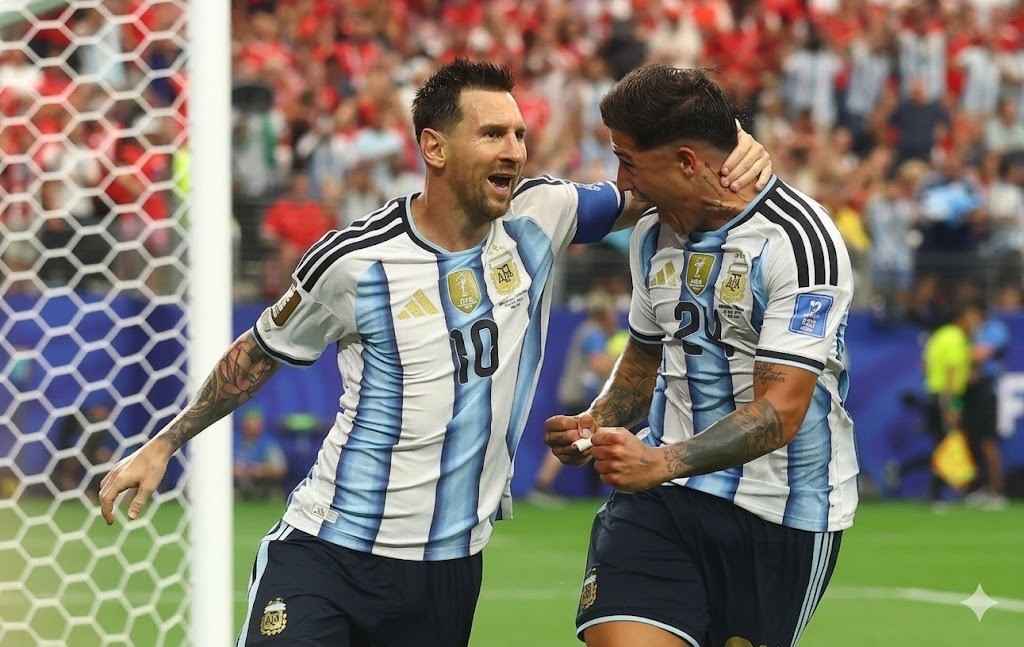
In the 38th minute, Messi collected the ball on the edge of the area and produced the composed finish that has defined his career. The strike moved him onto 17 World Cup goals and into a class of his own.
As Austria chased the game late on, Messi added another in stoppage time. Goal number 18 further extended his lead and underlined his remarkable form in North America.
Five goals in two matches. At 38 years old.
The numbers almost seem fictional.
A World Cup Journey Twenty Years in the Making
Messi’s World Cup story began in Germany in 2006.
Fresh from his breakthrough season at Barcelona, the teenage forward announced himself on the global stage against Serbia and Montenegro. Just 14 minutes after coming off the bench, he scored his first World Cup goal and also registered his first assist.
However, he remained a supporting figure during that tournament and finished with only one goal involvement.
The road to greatness was not immediate.
In South Africa in 2010, Messi endured a frustrating campaign despite playing a central role in Argentina’s run to the quarter-finals. He failed to score in five appearances, an outcome that fuelled criticism despite his influence on the team.
Everything changed in Brazil four years later.
Messi carried Argentina through the group stage almost single-handedly. He scored the winner against Bosnia-Herzegovina, followed it up with another decisive strike against Iran, and then produced a brilliant brace against Nigeria.
Yet despite leading Argentina to the final, he could not find the net in the knockout rounds as Germany broke Argentine hearts in Rio de Janeiro.
From Frustration to Football Immortality
The 2018 World Cup brought more disappointment.
Argentina exited in the Round of 16 against eventual champions France. Messi scored only once during the tournament, although he provided two assists in that dramatic defeat.
At that stage, questions remained over whether he would ever conquer football’s biggest stage.
Then came Qatar 2022.
It was the tournament that transformed Messi’s World Cup legacy forever.
He scored seven goals, more than he had managed across the previous four World Cups combined. After opening his account against Saudi Arabia, he delivered crucial goals against Mexico, Australia, the Netherlands, Croatia and France.
His two goals in the unforgettable final against France helped Argentina lift the trophy after a dramatic penalty shootout.
The image of Messi finally holding the World Cup became one of football’s defining moments.
The Greatest Goalscorer the Tournament Has Ever Seen
Many believed the 2026 World Cup would be a farewell tour.
Instead, Messi has arrived looking sharper, hungrier and more decisive than ever.
His hat-trick against Algeria drew him level with Klose. Against Austria, he completed the job.
The record-breaking goal showcased everything that has made Messi special throughout his career. Calmness under pressure, flawless technique and impeccable decision-making.
The second goal served as a reminder that he is still capable of deciding matches at the highest level.
While age slows most players, Messi continues to rewrite football history.
The remarkable achievement also places him among an elite group of World Cup legends. Against Austria, he became only the third player to score in six consecutive FIFA World Cup appearances, joining Just Fontaine and Jairzinho.
Meanwhile, Argentina have won their opening two matches at a World Cup for the first time since 2014 and their first without conceding since 1998.
Is There More History to Come?
That may be the most frightening thought for Argentina’s rivals.
Messi is not finished.
With 18 World Cup goals, he now owns the record outright. Yet he remains the focal point of an Argentina side that looks increasingly dangerous as the tournament progresses.
His five goals in two matches have already placed him among the favourites for the Golden Boot. Only Kylian Mbappé has scored two or more goals in more different World Cup matches than Messi, who has now achieved the feat four times.
Every touch, every chance and every match now carries the possibility of another milestone.
What once seemed impossible has become routine.
Two decades after his first World Cup goal in Germany, Lionel Messi has climbed to the summit of football’s greatest stage. The records continue to fall, the goals continue to arrive and the legend continues to grow.
Messi is no longer chasing history.
He is history.