

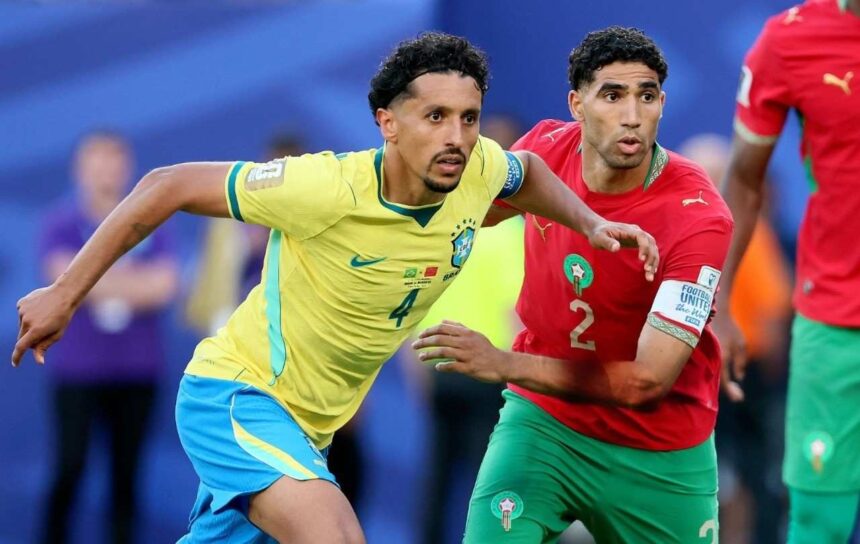
Morocco once again showed why they belong among the world’s elite football nations after holding five-time champions Brazil to a hard-fought 1-1 draw in their opening match of the 2026 FIFA World Cup.
While Vinícius Júnior rescued a point for Brazil and Alisson produced crucial late saves to prevent defeat, Morocco emerged from the contest with enormous credit. The Atlas Lions matched Brazil’s intensity, unsettled them for long periods and delivered another statement performance on football’s biggest stage.
Here are five major lessons from a memorable FIFA World Cup encounter.
Morocco Fear Nobody Anymore
Many teams approach Brazil with caution. Morocco did the exact opposite.
From the opening whistle, the Atlas Lions played with confidence, aggression and belief. They pressed high, attacked quickly and repeatedly exposed weaknesses in the Brazilian defence.
Within the first 10 minutes, Morocco led the shot count 5-1. Although none of those efforts forced Alisson into a save, the message was clear. This was a team determined to dictate the game rather than simply survive it.
Morocco registered the first four attempts of the match and became only the second team since 1966 to produce five shots against Brazil within the opening 10 minutes of a FIFA World Cup game. Portugal previously achieved the feat in 1966.
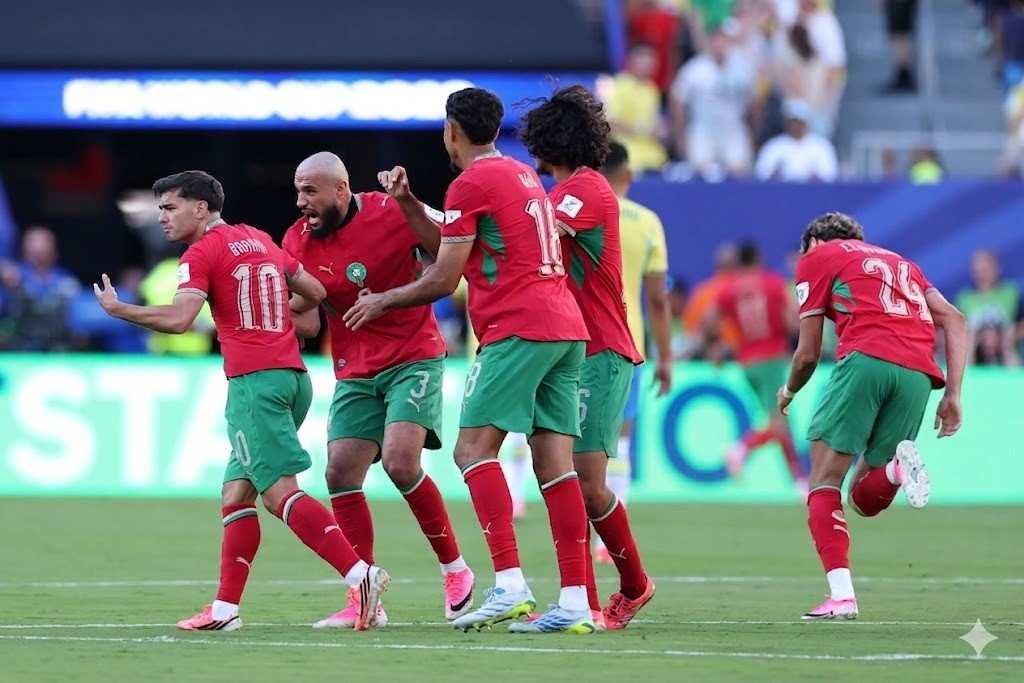
That fearless approach eventually paid off when Ismael Saibari punished poor defending to hand Morocco a deserved lead.
Brazil’s Unbeaten Opening Match Record Survives
For all Morocco’s excellence, Brazil still found a way to avoid defeat.
The Selecao entered the tournament carrying one of the most remarkable records in FIFA World Cup history. They had not lost an opening match since 1934 and had topped their first-round group at every World Cup since 1982.
At times, that record looked under serious threat.
Morocco dominated large periods of the first half and consistently pushed Brazil onto the back foot. However, elite teams often find solutions when under pressure, and Vinícius Júnior delivered exactly that.
His equaliser ensured Brazil extended their unbeaten run in opening FIFA World Cup matches to 21 tournaments dating back to 1938. The streak now stands at 17 wins and four draws, making it the longest such run in World Cup history.
Even so, Carlo Ancelotti will know his side escaped with a point rather than earned complete control of the match.
Vinícius Júnior Continues to Lead Brazil’s New Era
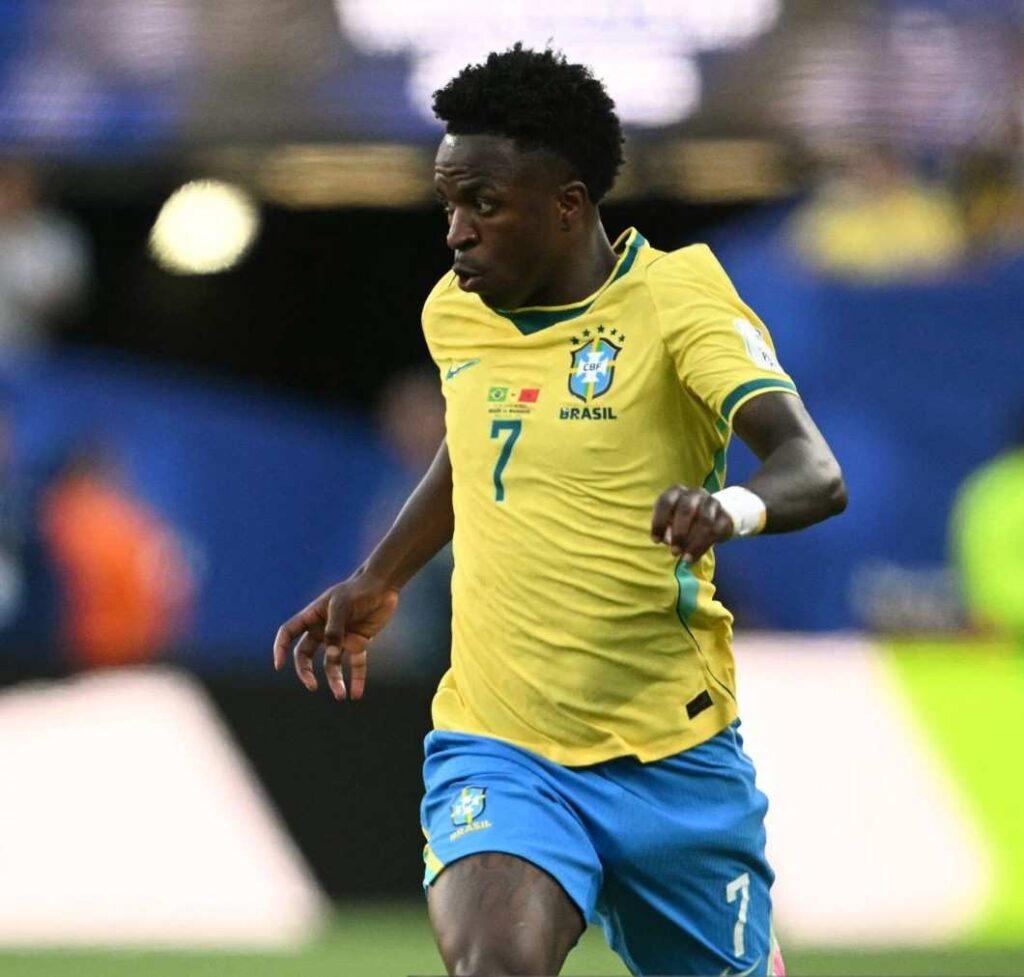
With Neymar still unavailable, much of Brazil’s attacking responsibility falls on Vinícius Júnior. The Real Madrid star once again showed why he has become the face of the national team.
His goal brought Brazil level and prevented an opening-day defeat. More importantly, it highlighted his growing influence within the squad.
The strike was Vinícius’ 10th international goal and his third scored on United States soil. Only Brazil itself has witnessed him score more often.
Before this match, Brazil had won every game in which Vinícius found the net. That perfect record finally ended, but his ability to deliver in important moments remained evident.
As the tournament progresses, Brazil will continue looking to Vinícius as their primary attacking leader.
Morocco’s Golden Generation Keeps Making History
Moroccan football continues to break new ground.
The draw delivered the country’s first ever FIFA World Cup point against a South American nation. Before this match, Morocco had suffered defeats against Peru in 1970 and Brazil in 1998.
The Atlas Lions also extended their unbeaten run in FIFA World Cup group-stage matches to five games, consisting of two victories and three draws. That sequence now represents the longest group-stage unbeaten run in Morocco’s history.
Individual milestones added further significance to the evening. Achraf Hakimi made his 11th FIFA World Cup appearance for Morocco, equalling the African record jointly held by François Omam-Biyik of Cameroon and Ghana’s Asamoah Gyan.
These achievements underline how this Moroccan generation continues to raise standards for African football on the global stage.
Morocco Must Learn to Sustain Their Pressure
If there was one frustration for Morocco, it was their inability to maintain first-half dominance.
The Atlas Lions overwhelmed Brazil during the opening 45 minutes. They produced 12 shots before the interval, a remarkable total against a team renowned for controlling possession and limiting opportunities.
In fact, Brazil had not allowed that many attempts across any of their previous six complete FIFA World Cup matches.
Yet the intensity dropped after the break.
Morocco failed to register a single shot throughout the second half until the ninth minute of stoppage time. As a result, Brazil gradually settled into the contest and eventually found their equaliser.
Against elite opponents, maintaining pressure for 90 minutes remains one of the final steps towards becoming genuine contenders for top spot in the group.
Despite that slight disappointment, Morocco left the stadium with plenty of reasons for optimism. They matched Brazil physically, challenged them tactically and looked every bit a team capable of advancing deep into the tournament.
Brazil remain favourites to win the group, but Morocco’s performance sent a powerful message to the rest of the 2026 FIFA World Cup. The Atlas Lions are not simply here to compete. They are here to challenge the very best.