
Dakar will make history on Saturday, October 31st when it hosts the opening of the 2026 Youth Olympic Games, the first Olympic event to take place in Africa.
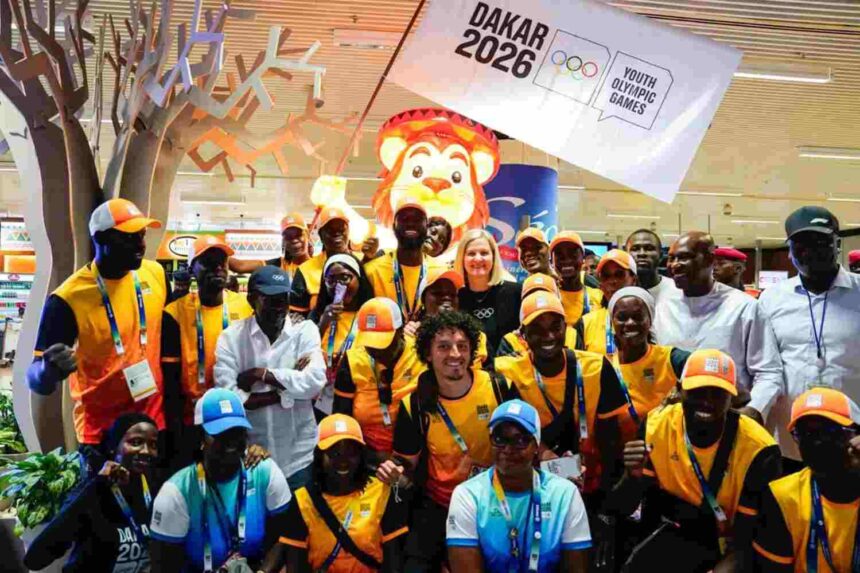
Dozens of volunteers gave International Olympic Committee (IOC) President Kirsty Coventry a warm welcome with high fives. She praised their enthusiasm and thanked them for helping make the Games special.
“It’s such a warm welcome, and I think volunteers bring such a special aspect to an Olympic Games and to a Youth Olympic Games. We’re feeling that energy now, so thank you all for volunteering. Thank you for making these Games so special.”
Around 2,700 athletes aged 17 and under are expected to compete in the fourth edition of the Youth Olympic Games. The programme will feature 25 sports over two weeks.
Organisers will stage events across three locations: Dakar, Diamniadio and Saly. The coastal town of Saly lies about 80 kilometres (50 miles) south of the capital. In total, the Games will use eight venues.
Senegal will field 136 athletes as the host nation. Meanwhile, competitors from Russia will return to Olympic competition under their national flag and anthem in several sports, where the relevant international federations allow it.
Senegal Hopes to Turn Olympic Spotlight into Lasting Benefits
For Senegal, the event means far more than two weeks of sport. Hosting the Youth Olympic Games puts the country at the centre of a historic moment for the Olympic Movement. However, officials must now turn the international attention into lasting benefits for local communities.
The Games come as Senegal faces rising debt and serious economic pressure. Higher living costs, unemployment and financial hardship remain major concerns for many people. As a result, the considerable investment in infrastructure and preparations has done little to ease the pressure on household budgets.
Authorities argue that the spending can still deliver long term gains. They hope the Games will develop local skills, improve training opportunities and leave better facilities after the athletes depart. Senegal also wants the event to raise Dakar’s profile as a host for major sporting competitions and attract more tourists.
President Bassirou Diomaye Faye has stressed the wider importance of the occasion. When the Youth Olympic Games flame arrived in Dakar on 12 September, he told Senegalese people that young Africans were being watched with ‘confidence and pride’.
Faye also said he wanted visitors to see the ambition and determination of Africa’s younger generation. Before reaching the capital, the flame travelled about 3,600 kilometres (2,200 miles) across Senegal. Its journey took it through all 14 regions of the country.
The return of Russian athletes adds another international dimension to Dakar 2026. In July, the International Olympic Committee effectively lifted the suspension of the Russian Olympic Committee. That decision opened the door for Russian competitors to take part under their national symbols at the Youth Games, provided the relevant international federation permits it.
With the opening approaching, Senegal now faces the task of delivering a successful event while ensuring its investment creates opportunities beyond the closing ceremony.