
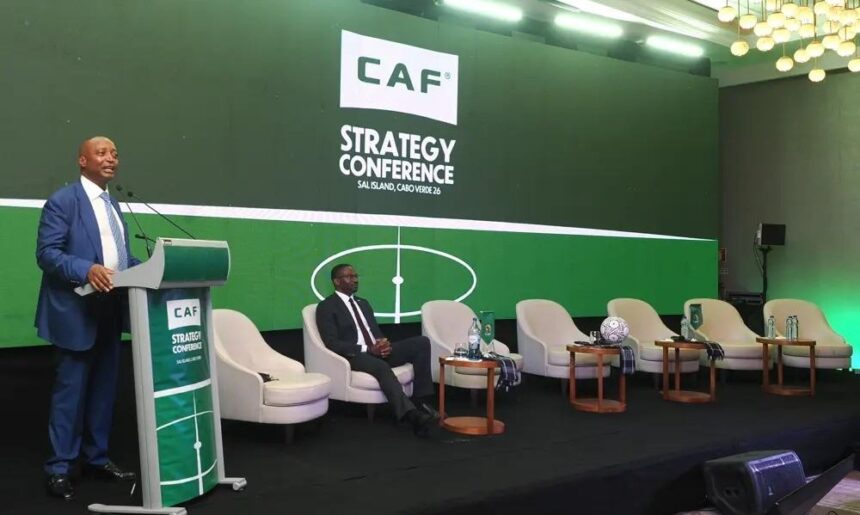
The Confederation of African Football (CAF) has concluded a three day strategy conference in Santa Maria, Sal Island, Cabo Verde, with a clear target for 2030: turn Africa’s progress at the 2026 FIFA World Cup into lasting success.
The conference ended on Friday after high level discussions on football development, investment and the future of the game across the continent.
Presidents and senior officials from CAF’s 54 Member Associations attended alongside national team coaches, technical leaders and international football experts. Together, they reviewed Africa’s World Cup performances and explored ways to improve its competitiveness.
CAF President Dr Patrice Motsepe led the gathering. Cabo Verde Head of State Dr Janira Hopffer Almada and FIFA President Gianni Infantino also addressed delegates.
Africa entered the conference after its strongest collective World Cup showing. A record 10 African countries competed at the expanded 2026 tournament, and nine advanced beyond the group stage.
Morocco reached the quarter finals for the second consecutive World Cup. Meanwhile, debutants Cabo Verde progressed from the group stage, adding to the continent’s achievements.
These results shaped the conference agenda. Rather than simply celebrate the progress, delegates focused on what African football must do to build on it before 2030.
Motsepe demands results as CAF plans for 2030
Motsepe urged African football leaders to turn their ambitions into practical action, stressing that plans alone would not deliver success.
“There is a big gap between good plans, good intentions and what we do practically in terms of investments and results. We are judged by results,” he told delegates during the Conference.
He also made CAF’s ultimate ambition clear, insisting that an African nation can win the World Cup.
“We have to win the World Cup. We are going to win the World Cup. One of the nations from Africa will win the World Cup,” Motsepe said.
CAF said the conference aimed to make football across all 54 Member Associations world class and self sustaining. It also seeks to improve the quality and global competitiveness of CAF competitions.
Delegates discussed investment in national associations, coaching, youth development, football administration and stronger structures for developing players. They also considered ways to build commercial and broadcasting partnerships to support the game’s growth.
Infantino praised the continent’s progress and highlighted the difference between Africa’s results at the 2018 and 2026 World Cups. No African team advanced beyond the group stage in 2018, compared with nine of the 10 representatives in 2026.
The FIFA president linked that improvement to work across the continent. He also called for continued investment in infrastructure and opportunities, noting that African talent already plays a major role in world football.
However, he stressed that the continent must create better pathways for its players and strengthen the structures that support their development.
His message to delegates captured the urgency of the task ahead: “The road to 2030 begins now.”