
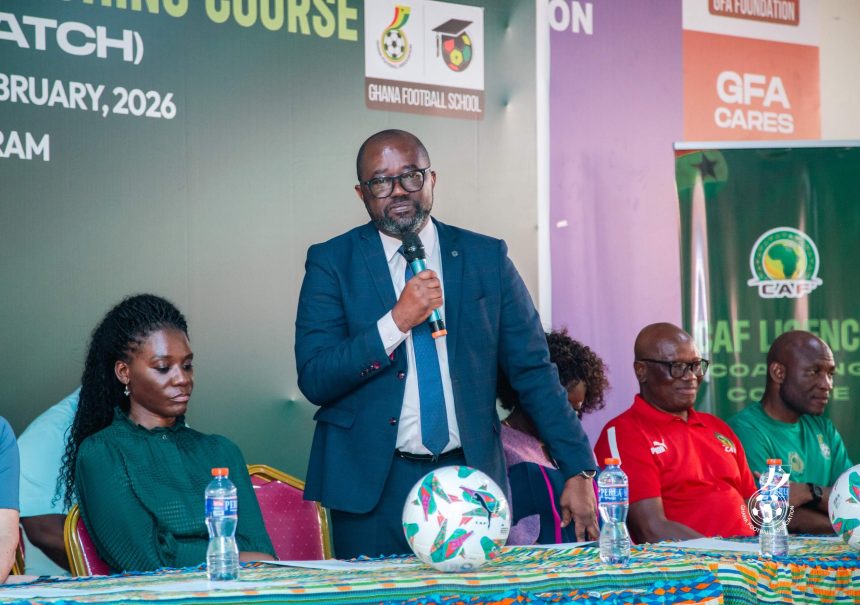
President of the Ghana Football Association, Kurt Edwin Simeon-Okraku, has delivered a passionate call to action to participants of the CAF Licence A Coaching Course, urging them to transform the landscape of Ghanaian football.
Speaking at the opening ceremony of the intensive programme at the GFA Technical Centre in Prampram, the President addressed the urgent need for a technical revolution within the domestic game. He challenged the gathered coaches to move beyond mediocrity and embrace the high standards required to compete at the elite level of African football.
The President was remarkably candid in his assessment of the current state of the profession in the country, emphasizing that significant changes are necessary to restore Ghana’s footballing prestige. Addressing the participants directly, he expressed his dissatisfaction with recent trends in the technical sector. “Coaching in Ghana is very poor. I have never been happy and have made my views known. Coaching standards have been poor, and I really mean it. It’s the reason we pushed to get where we are and want us to improve,” he stated firmly.
This particular course represents a major milestone for the association, as it is the first time the CAF Licence A programme has been held in Ghana since 2017. As the 2nd Vice President of CAF, Simeon-Okraku highlighted the exclusivity of the programme and the weight of responsibility resting on the shoulders of the current cohort. He described the group as a historic assembly that must lead the way in making the local game more attractive and competitive across all age groups.
While his critique was sharp, the President clarified that his comments were aimed at the general ecosystem rather than a total lack of talent among individuals. He encouraged the coaches to recognize the value of the platform they have been given to refine their skills. “When I say standards have not been good, it doesn’t mean there are no good coaches in Ghana,” he clarified. “You should count yourself blessed for being part of this historic group. You have an opportunity to make our football attractive at both the youth and top levels.”
The CAF Licence A serves as one of the continent’s most prestigious technical qualifications, acting as a mandatory requirement for those aiming to lead top flight clubs or national team structures. The GFA President reiterated that his administration has made deliberate efforts to prioritize coach education as a pillar of their development strategy. He noted that the federation has worked tirelessly to secure these opportunities to ensure that Ghanaian tacticians are not left behind in the rapidly evolving world of modern football.
The President detailed several initiatives already in place to support this technical growth, ranging from grassroots training to international exposure. He underscored the federation’s commitment to providing the necessary tools for success. “Since we got the opportunity to serve, I have given coaches every opportunity that I can find by enhancing their capacity through education,” he said. These efforts include providing free tuition for youth coaches and sponsoring high level attachments for domestic trainers in football hubs like England and Germany.
Beyond technical ability, the address touched on the ethical and professional conduct required within the coaching fraternity. Simeon-Okraku spoke out against the culture of professional jealousy that he believes hinders collective progress in the industry. He called for a new era of mutual respect and continuity among managers, regardless of club rivalries or administrative changes. He insisted that the success of one coach should be viewed as a victory for the entire technical community.
In a direct warning against unprofessional behavior, he urged the participants to foster a supportive environment rather than tearing down their peers. “You must stop sabotaging your colleagues because it will not take you anywhere. A coach takes over a club from a colleague and the first thing they do is to rubbish everything their predecessor has done. This is not proper and won’t help you.” he cautioned. This plea for collaboration is seen as a vital step toward creating a sustainable and unified football ecosystem in the country.
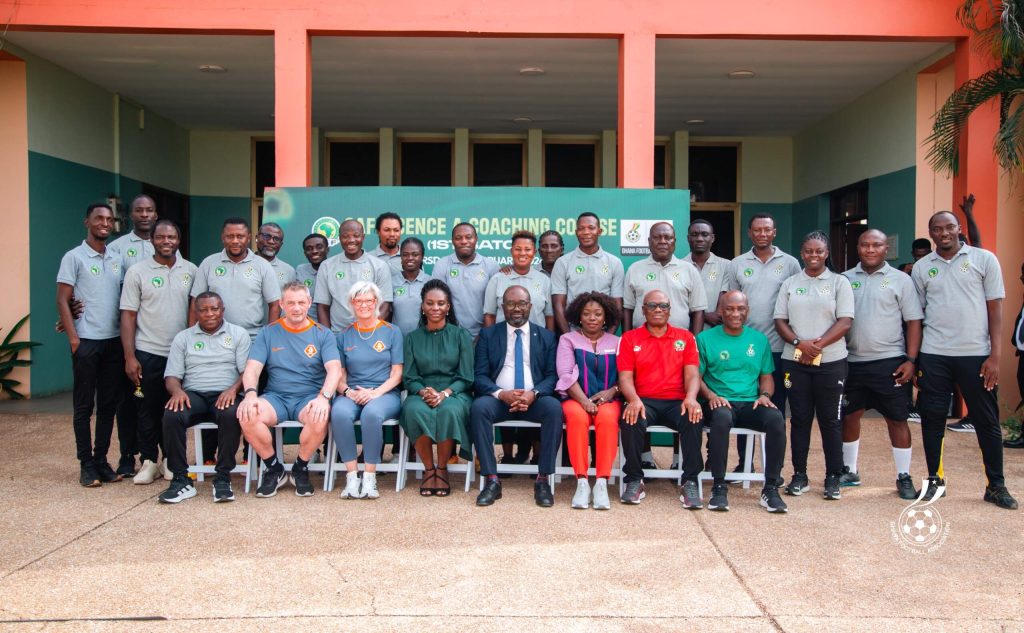
The rigorous 10 day programme, which commenced on February 17, 2026, features a select group of 20 elite coaches from across the continent. These participants are undergoing a demanding curriculum at the Ghanaman Soccer Centre of Excellence, involving both deep theoretical study and practical on field sessions. The training covers essential modern topics such as tactical principles, performance analysis, leadership psychology, and advanced match preparation techniques.
As the course progresses toward its conclusion, the successful candidates will join an elite bracket of certified professionals capable of implementing global best practices in Ghana. The GFA remains optimistic that this investment in human capital will yield immediate benefits in the quality of play seen in the domestic leagues. By raising the bar for technical certification, the association hopes to ensure that every Ghanaian player is guided by a coach who meets the highest continental standards.