
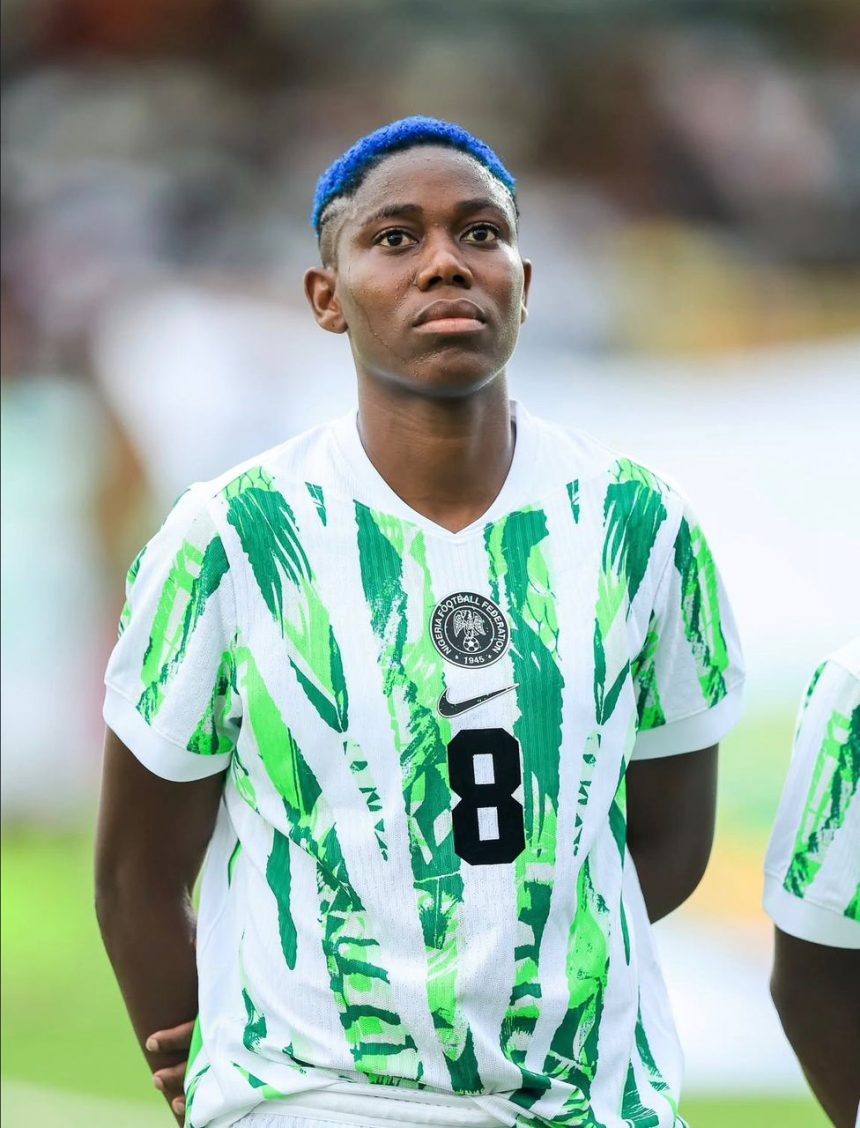
Super Falcons star and African football icon, Asisat Oshoala, has questioned the Confederation of African Football (CAF) over what she described as an increasing focus on Morocco in recent African football activities.
In a message shared on her official X (formerly Twitter) account, Oshoala highlighted the number of awards, tournaments and events involving Morocco under CAF, saying other African countries need more opportunities.
The big question here is when will this whole @CAF_Online compensation to Morocco end. Awards, tournaments n all. It’s getting boring now. We need other countries to step up. Everything concerning African football happens in Morocco, feels like that’s the new HQ, she wrote.
Oshoala’s remarks come at a time when Morocco has hosted several major CAF competitions in quick succession, including:
- 2025 Africa Cup of Nations (AFCON) – the senior men’s continental championship being held in Morocco from December 2025 to January 2026.
- 2025 U-17 Africa Cup of Nations – hosted earlier last year, where Morocco also won the title.
- 2024 Women’s Africa Cup of Nations (WAFCON) – played in July 2025 after being awarded to Morocco.
- 2024 CAF Women’s Champions League – the premier women’s club tournament held in Morocco in November 2024.
- 2025 Women’s Futsal Africa Cup of Nations – the first edition of the women’s futsal championship, staged in Rabat in April 2025.
- CAF African Player of the Year Awards ceremonies – recently held in Morocco, bringing the continent’s biggest individual football honours to the country.
The cluster of high-profile competitions in Morocco has been praised by some as recognition of the country’s infrastructure and organizational capacity. However, Oshoala’s statement underscores a call for a more balanced distribution of CAF activities across the continent, suggesting that concentrating these events in one country could limit broader football development in Africa.
Oshoala, one of the continent’s most decorated players, has consistently advocated for fairness and growth within African football structures and took to social media to articulate her views on the matter.
Her comments add to ongoing conversations about inclusivity and equitable hosting opportunities in African football, as nations continue efforts to develop and elevate the sport across the region.